


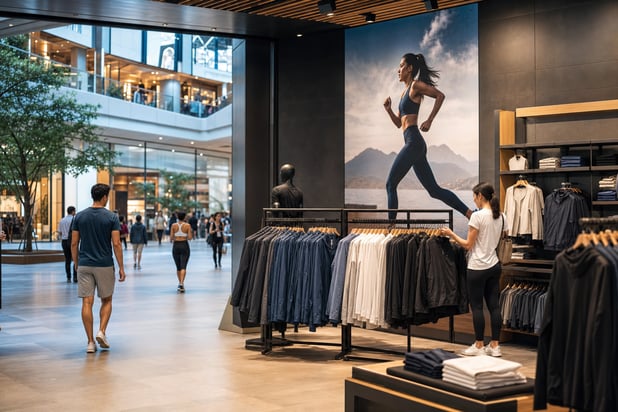
Choosing between permanent and temporary wall graphics can transform your retail space, exhibition stand or brand activation, but only if the solution aligns with your business goals, installation environment, and sustainability commitments.

From impactful retail wall graphics that shape long-term brand environments to flexible temporary wall graphics for campaigns and exhibitions, the right choice goes beyond appearance alone, factoring in durability, cost, installation, and environmental impact. As custom wall graphics continue to evolve as a powerful branding tool, understanding when to invest in a permanent solution versus a short-term application is key to maximising both visual impact and return on investment.
Understanding The Core Differences Between Permanent And Temporary Wall Graphics
Wall graphics have evolved into powerful tools for brand expression, capable of transforming environments from retail spaces to exhibition stands. Yet understanding the fundamental distinctions between permanent and temporary wall graphics is essential for making strategic investment decisions that align with your business objectives. At Data Image Group, we engineer both solutions to deliver exceptional visual impact, but each serves distinctly different operational needs.
Permanent wall graphics are designed for longevity, typically utilising high-adhesive vinyl materials or specialist substrates engineered to withstand years of exposure without degradation. These solutions bond firmly to surfaces and are intended for locations where brand messaging remains consistent over extended periods, think flagship retail environments, corporate headquarters, or permanent showroom installations. The installation process often involves surface preparation, precise application techniques, and materials selected for their resistance to UV exposure, moisture, and physical wear.
Temporary wall graphics, by contrast, are precision-engineered for flexibility and clean removal. Utilising low-tack adhesive technologies or fabric-based systems, these graphics enable brands to refresh messaging seasonally, respond to campaign cycles, or adapt environments for specific events without surface damage or residue. This removability without compromising visual quality makes temporary wall graphics indispensable for dynamic retail programmes, short-term brand activations, and exhibition environments where frequent updates drive customer engagement and commercial performance.
When Permanent Wall Graphics Deliver Long-Term Brand Impact
Permanent wall graphics deliver exceptional value when your brand narrative requires consistency, durability, and long-term visual presence. Flagship retail locations, corporate environments, and permanent exhibition spaces benefit from the robust construction and enduring colour vibrancy that permanent installations provide. These solutions are engineered to withstand high-traffic conditions, environmental variables, and extended UV exposure whilst maintaining brand colour accuracy; a critical consideration for luxury goods, automotive showrooms, and consumer brand environments where visual consistency underpins brand equity.
From a financial perspective, permanent wall graphics offer superior cost-per-impression economics over multi-year timeframes. The initial investment in high-specification materials, surface preparation, and installation is amortised across years of continuous brand exposure, making them strategically sound for locations with stable messaging requirements. Our in-house production capabilities enable us to specify materials precisely matched to environmental conditions, whether moisture-resistant formulations for hospitality environments or anti-graffiti laminates for transport hubs, ensuring performance longevity that protects your investment.
However, permanent installations demand careful strategic consideration. Brand evolutions, seasonal campaigns, or market repositioning can render permanent graphics obsolete, necessitating removal and reinstallation that incurs both time and financial investment. For marketing directors and visual merchandising leaders navigating brand evolution cycles, understanding the commitment inherent in permanent installations is essential to avoiding costly misalignment between physical environments and evolving brand narratives.
Why Temporary Wall Graphics Offer Flexibility For Dynamic Retail And Event Environments
Temporary Wall Graphics have become indispensable for brands operating in fast-moving retail and event sectors where agility, seasonal messaging, and campaign responsiveness drive competitive advantage. These solutions enable marketing teams to execute nationwide rollouts, refresh in-store environments for product launches, and create immersive brand experiences at exhibitions, all whilst maintaining the flexibility to adapt messaging without surface damage or lengthy downtime. This operational agility translates directly into commercial performance, enabling brands to align physical environments with promotional calendars, seasonal trends, and real-time market opportunities.
The material technologies underpinning Temporary Wall Graphics have advanced significantly, delivering visual impact indistinguishable from permanent installations whilst maintaining clean removability. Our fabric-based wall graphics systems, for instance, combine rich colour depth with wrinkle-free application and repositionable installation, enabling rapid environment transformation without specialist removal techniques. Low-tack vinyl formulations provide crisp, high-resolution imagery suitable for photography backdrops, event branding, and temporary retail installations, with adhesive systems engineered for damage-free removal from painted walls, glass, and finished surfaces.
For exhibition and event environments, temporary wall graphics deliver unparalleled versatility. Modular fabric systems with lightweight aluminium frames enable rapid installation, efficient transport, and reusable frameworks that reduce both logistical complexity and environmental impact. This reusability aligns with sustainability commitments whilst delivering cost efficiencies across multi-event programmes, a strategic advantage for brands managing annual exhibition calendars or multi-site brand activation schedules. The ability to update graphics independently of structural elements extends asset life cycles and enables messaging adaptation without wholesale stand replacement, supporting both budgetary control and environmental responsibility.
Material Selection And Sustainability Considerations For Both Approaches
Material selection fundamentally influences both performance and environmental impact, demanding strategic evaluation aligned with your sustainability commitments and operational requirements. Permanent wall graphics traditionally utilise PVC-based vinyl materials engineered for durability and weather resistance, yet these present end-of-life challenges and contribute to Scope 3 emissions, considerations increasingly critical for brands advancing ESG commitments and transparent sustainability reporting. At Data Image Group, we engineer alternatives including recyclable PET substrates, bio-based adhesives, and latex ink systems that eliminate VOC emissions whilst maintaining colour vibrancy and durability performance.
Temporary wall graphics present distinct sustainability opportunities when material selection and system design prioritise reusability and circular economy principles. Our tension fabric systems utilise fabrics manufactured from recycled PET bottles, combining environmental responsibility with exceptional print quality and multi-use durability. These systems enable graphic updates through fabric panel replacement whilst retaining aluminium framework infrastructure, significantly reducing material consumption across campaign cycles. Low-tack vinyl formulations enable clean removal and, when specified appropriately, material recycling through take-back programmes that divert waste from landfill and support closed-loop material flows.
The sustainability equation extends beyond material composition to encompass production processes, logistics efficiency, and end-of-life pathways. Our zero-to-landfill production approach, combined with lightweight material specifications that reduce transport emissions, enables brands to quantify and report environmental impact reduction across visual merchandising programmes. For retail design directors and brand leaders navigating stakeholder expectations around environmental responsibility, understanding material lifecycles, recyclability pathways, and supplier commitments to sustainable manufacturing becomes essential to aligning physical brand expressions with corporate sustainability targets and maintaining stakeholder confidence.
Making The Strategic Decision: Matching Wall Graphics To Your Business Objectives
Strategic alignment between wall graphic solutions and business objectives demands systematic evaluation across multiple dimensions: messaging permanence, budget allocation, installation environment, sustainability commitments, and operational flexibility requirements. For flagship retail locations with consistent brand narratives and multi-year tenancies, permanent wall graphics deliver superior long-term value through durability, consistent brand presence, and cost-per-impression economics. Conversely, brands executing seasonal campaigns, managing multi-site promotional calendars, or operating within exhibition and event environments gain a competitive advantage through temporary solutions that enable rapid messaging adaptation and environment transformation without capital reinvestment.
Budget considerations extend beyond initial acquisition to encompass the total cost of ownership, including installation complexity, update frequency, removal requirements, and asset reusability. Temporary wall graphics with modular frameworks and replaceable graphic panels enable amortised investment across multiple campaigns, reducing per-event expenditure whilst maintaining visual impact consistency. This economic model particularly benefits brands managing annual exhibition programmes or seasonal retail refreshes, where graphic update costs remain controllable whilst infrastructure investment delivers multi-year value. Our 3D design and prototyping capabilities enable confident specification decisions, with high-resolution renders validating aesthetic impact and spatial integration before production commitment.
Ultimately, the optimal solution frequently involves strategic combinations of both approaches, permanent graphics anchoring consistent brand elements whilst temporary systems enable dynamic campaign messaging and seasonal storytelling. This hybrid strategy delivers brand consistency, operational flexibility, and investment efficiency.
At Data Image Group, we collaborate with marketing directors and visual merchandising leaders to engineer solutions matched precisely to strategic objectives, environmental variables, and sustainability commitments. Our in-house production, advanced material knowledge, and end-to-end project delivery ensure flawless execution that transforms retail spaces, exhibition stands, and brand activations into environments that inspire, engage, and convert, whilst maintaining the agility to evolve alongside your brand narrative and market opportunities. Talk to our team and let us guide you through your options.
No Comments Yet
Let us know what you think