



Retail campaigns don’t fail because of weak creative, they fail when timelines break down. Across large-scale POS rollouts, even small delays in production, logistics, or installation can disrupt launches and weaken impact at the point of sale.
Leading brands avoid this by building precision into every stage of delivery. In this article, we explore how successful brands deliver POS campaigns on time, maintain consistency across every location, and reduce the risks that lead to costly rollout failures.

Why Timing Defines Success in POS Campaign Delivery?
In the high-stakes environment of retail marketing, POS campaigns live or die by their timing. When Chanel launches a new fragrance or Dior introduces a seasonal collection, the display materials must arrive precisely when promised, not a day late, not misaligned with the advertising blitz, and never after customers have already walked past empty retail spaces. The commercial impact of a POS campaign relies entirely on synchronisation: between brand messaging, product availability, and physical presence at the point of purchase.
Leading brands understand that timing isn't simply about meeting a deadline: it's about orchestrating multiple moving elements to create a singular moment of maximum impact. A delayed campaign doesn't just postpone success; it erodes brand credibility, frustrates retail partners, and hands competitive advantage to rivals whose displays are already capturing customer attention. For luxury and consumer brands operating across multiple territories, the complexity multiplies exponentially. A POS campaign launching simultaneously across 200 European locations demands military precision in planning, production, and logistics.
It encompasses design approval cycles, material procurement, production scheduling, quality assurance, packaging specifications, and installation coordination. Each stage introduces potential delays that can cascade through the timeline. Brands that consistently deliver flawless POS campaigns recognise that timing must be engineered into every phase of the process, not treated as an afterthought or managed through rushed contingency planning.
Strategic Planning That Eliminates Delays Before Production Begins
The foundation of on-time POS campaigns delivery is established long before the first display unit enters production. Leading brands invest substantial effort in front-end planning that identifies and eliminates potential delays before they materialise. This begins with detailed project scoping that captures every specification, from dimensional requirements and material preferences to colour standards and sustainability criteria. Ambiguity at the briefing stage inevitably creates delays during production when questions arise that require client clarification.
Sophisticated 3D design and prototyping capabilities allow brands to visualise, test, and refine display concepts with absolute precision before committing to manufacture. High-resolution renders and interactive fly-throughs enable stakeholders to evaluate layout, flow, lighting, and customer experience in virtual environments that mirror real-world conditions. This validation process dramatically accelerates sign-off cycles by reducing the need for physical prototypes and eliminating the risk of discovering fundamental design flaws after production has commenced.
Material selection represents another critical planning decision that directly impacts delivery timelines. Leading brands work with production partners who maintain comprehensive knowledge of material properties, availability, lead times, and sustainability credentials. Specifying materials that align with both aesthetic requirements and supply chain realities prevents the delays that occur when obscure or long-lead-time materials are selected without consideration for procurement timelines.
The planning phase also establishes clear communication protocols, approval hierarchies, and decision-making frameworks that prevent bottlenecks during execution. POS campaigns falter when approval processes involve unclear stakeholder responsibilities or when feedback loops create iterative revision cycles without defined endpoints. Brands that consistently deliver on time establish upfront agreements about decision authority, response timeframes, and escalation procedures that keep projects moving forward with momentum.
Advanced Production Technology That Accelerates Turnaround Without Compromise
Production capability separates brands that deliver consistently from those that promise optimistically but fail operationally. The difference lies not in working faster, but in deploying advanced technology that eliminates traditional bottlenecks whilst maintaining exacting quality standards. Automated cutting systems, for instance, transform production economics by enabling overnight operation and dramatically reducing the time required to process complex geometries. The Kongsberg C66 Robotic handler represents this capability at its apex, delivering high-speed, high-precision cutting that accommodates shorter production runs without compromising quality or extending timelines.
In-house production environments provide another significant advantage in timeline management. When design, engineering, printing, finishing, and assembly occur under one roof, the coordination delays inherent in multi-vendor supply chains simply vanish. There are no handoffs between separate companies, no transportation delays between production stages, and no communication gaps where specifications might be misinterpreted. This integrated approach enables real-time problem-solving when challenges arise, rather than the protracted email exchanges and finger-pointing that characterise fragmented supply chains.
Material innovation also contributes to accelerated turnaround. Lightweight honeycomb boards, for example, deliver structural strength whilst dramatically reducing production and finishing time compared to traditional substrate materials. These boards can be precision-cut to complex shapes, finished with high-quality graphics, and prepared for dispatch in a fraction of the time required for heavier alternatives. For brands managing large-scale rollouts, this efficiency translates directly into compressed production schedules without sacrificing durability or visual impact.
Advanced production technology also enables greater flexibility in responding to last-minute changes, an inevitable reality in fast-moving retail environments. When brands need to incorporate updated pricing, revised messaging, or refreshed creative assets close to launch deadlines, automated workflows and digital production systems can accommodate these changes without triggering wholesale production restarts.
Logistics Coordination That Ensures Simultaneous Multi-Site Rollouts
Even flawless production means nothing if materials arrive at the wrong location, at the wrong time, or in the wrong condition. Leading brands orchestrate logistics with the same rigour they apply to creative development, recognising that the final mile of campaign delivery poses unique challenges that require specialist expertise. Multi-site rollouts across diverse geographies introduce variables around transportation regulations, customs procedures, site access restrictions, and installation scheduling that can derail POS campaigns if not anticipated and managed proactively.
Successful coordination begins with detailed installation planning that accounts for site-specific requirements at every location. This includes understanding delivery access points, loading dock availability, lift dimensions, installation windows, and any restrictions imposed by landlords or shopping centre management. For luxury brands installing POS campaigns in flagship boutiques or high-street retail spaces, these logistics become even more complex as installations must often occur outside trading hours to avoid disrupting customer experience. The ability to coordinate precise delivery timing—measured in hours rather than days—becomes essential.
Packaging and protection systems play an equally critical role in ensuring campaign materials arrive in pristine condition, ready for immediate installation. Display units designed for luxury retail environments cannot tolerate scratches, dents, or colour contamination that might occur during transportation. Leading production partners engineer bespoke packaging solutions that protect delicate finishes and complex assemblies whilst facilitating efficient unpacking and waste management at installation sites.
For brands operating across multiple countries, logistics coordination must also address regulatory compliance, sustainability reporting, and reverse logistics for campaign materials destined for reuse or recycling. The most sophisticated operations maintain detailed tracking systems that provide real-time visibility into shipment status, enabling proactive intervention if delays threaten to compromise installation schedules. This transparency extends to clients, who receive regular updates and can access shipment information through integrated project management platforms rather than relying on ad-hoc email updates.
Quality Control Systems That Prevent Costly Rework and POS Campaign Setbacks
Quality failures represent the most insidious threat to campaign timelines because they typically surface late in the production cycle, when options for recovery are limited and expensive. A colour mismatch discovered during final inspection can necessitate complete reproduction. Structural weaknesses identified during installation can render entire display systems unusable. Graphic misalignments noticed after materials reach retail sites can damage brand perception irreparably. Leading brands eliminate these risks through systematic quality control that validates conformance at every production stage rather than discovering problems when remediation is most difficult.
Colour consistency stands as perhaps the most critical quality dimension for brand campaigns, particularly in luxury goods and cosmetics sectors where precise colour reproduction directly impacts brand recognition and perceived quality. Brands invest in production partners who maintain rigorous colour management systems, including calibrated equipment, controlled lighting environments, and documented processes for achieving and verifying colour accuracy. This becomes especially important for POS campaigns spanning multiple production batches or incorporating materials with different substrate properties that might influence colour appearance.
Structural integrity testing prevents the installation failures that occur when display systems cannot support intended loads, withstand handling during transportation, or maintain stability in retail environments. Pre-production prototyping serves this validation function for bespoke designs, whilst established systems benefit from documented load ratings and installation specifications.
Documentation and traceability systems enable rapid diagnosis and resolution when quality issues do emerge. Leading production environments maintain detailed records linking specific display units to production batches, material lots, operators, and timestamps. This granularity allows teams to quickly determine whether an identified issue represents an isolated anomaly or a systematic problem requiring broader intervention. For brands managing POS campaigns across hundreds of locations, this capability can mean the difference between replacing a handful of affected units and recalling an entire rollout.
The ultimate quality control system, however, is cultural rather than procedural. Brands that consistently deliver flawless POS campaigns partner with production organisations where quality represents a core value rather than a compliance checkbox. This manifests in teams who take personal ownership of outcomes, who identify and address potential issues proactively, and who communicate transparently when challenges arise. These partnerships transform quality management from a defensive activity focused on catching errors into a collaborative process focused on continuous improvement and shared success.
If you’re planning a large-scale POS campaign, timing, consistency, and execution matter just as much as the creative itself. At Data Image, we help global brands deliver high-impact campaigns with the precision, visibility, and reliability needed to launch on time and at scale. Get in touch with the team to discuss your next campaign.
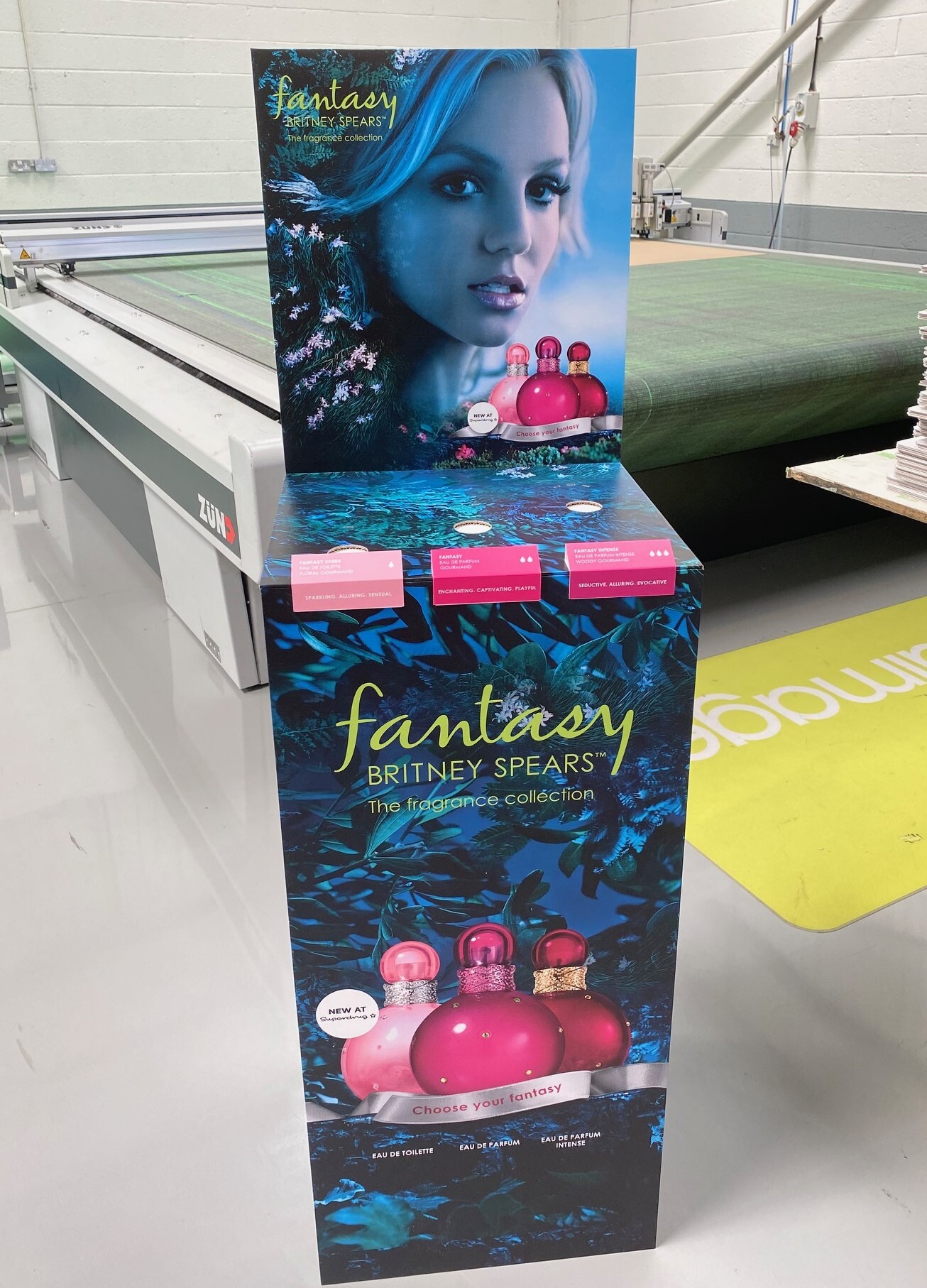
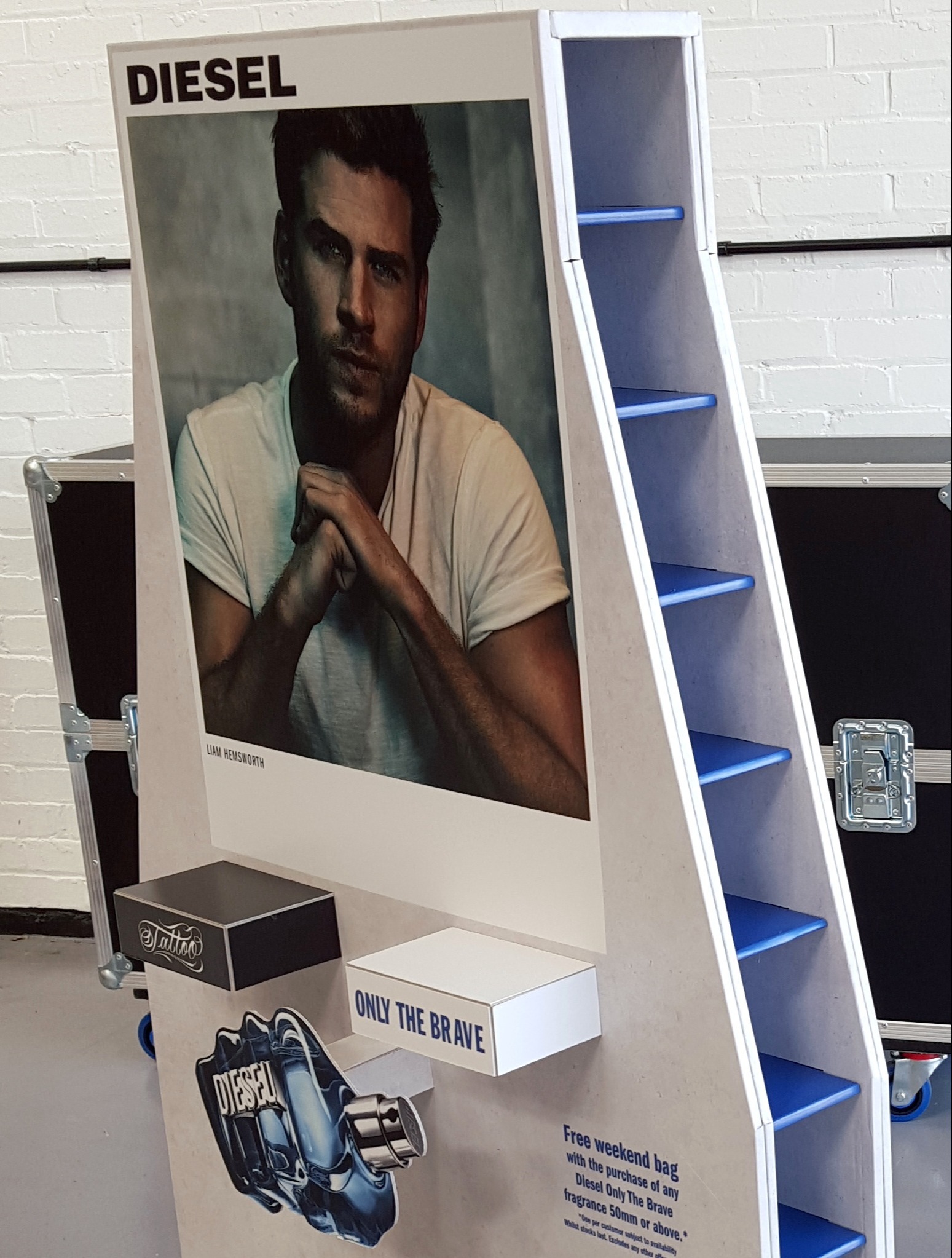
Designing Luxury Fragrance Displays For Weight, Visual Impact and Success
How Logistics And Installation Influence The Success Of Point of Sales Displays?
No Comments Yet
Let us know what you think