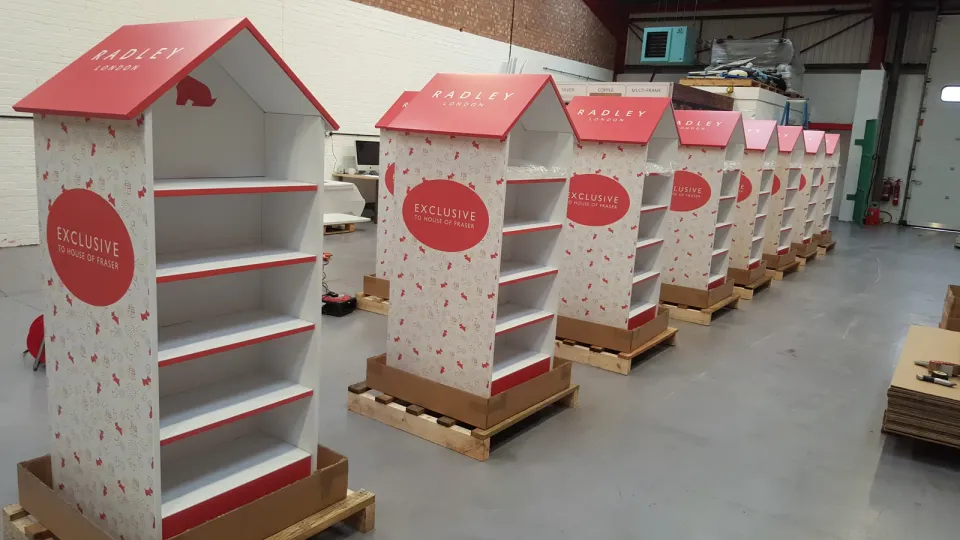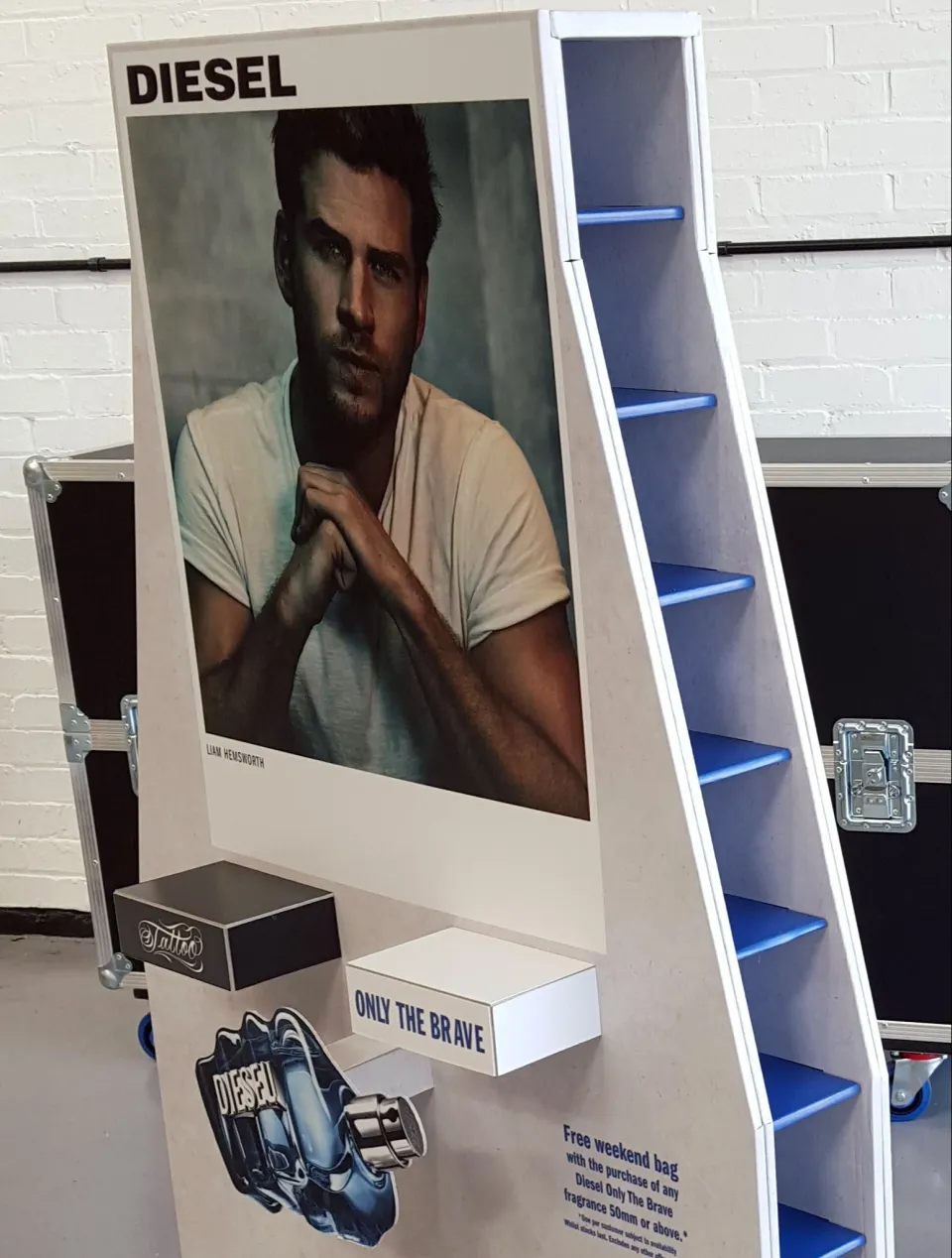
Point of sale
How to Deliver High-Impact POS Display Printing Campaigns Without Compromising ESG Commitments?
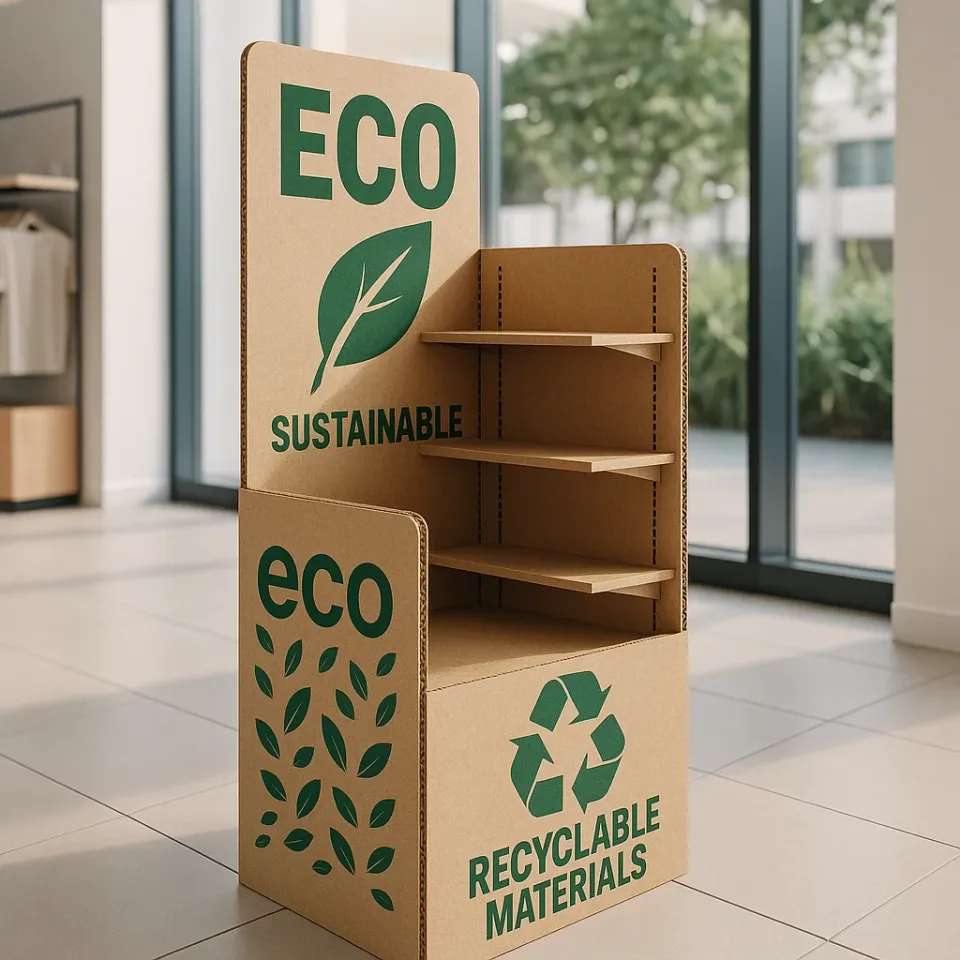
Retail brands no longer need to choose between powerful visual merchandising and measurable sustainability, discover how to achieve both through strategic material selection, modular design and transparent footprint tracking.
Why Sustainability and Visual Impact Are No Longer Competing Priorities in Retail?
The retail landscape has fundamentally shifted. Marketing directors and visual merchandising leaders once faced an impossible choice: deliver show-stopping point-of-sale displays that drive footfall and sales, or meet increasingly stringent Scope 1, 2, and 3 sustainability targets. This false dichotomy has been dismantled by material innovation, intelligent design thinking, and transparent accountability systems that prove environmental responsibility and visual excellence can coexist.
Leading consumer brands, from cosmetics to luxury goods, now recognise that sustainability credentials strengthen rather than compromise brand presence. High-impact POS display printing campaigns leverage recyclable substrates, modular formats, and precision engineering to create experiential retail environments that generate user-generated content whilst reducing carbon footprints by up to 40%. The shift reflects changing consumer expectations: shoppers actively seek brands demonstrating authentic environmental commitment, making sustainable merchandising a competitive advantage rather than a compliance exercise.
This transformation requires rethinking the entire campaign lifecycle. Rather than treating sustainability as a final-stage consideration, forward-thinking brands embed low-impact principles from initial concept through installation and eventual reuse. Advanced material partnerships, colour-calibrated processes on eco-substrates, and real-time footprint dashboards enable marketing teams to deliver consistent brand presentation across multi-location campaigns whilst providing the measurable data required for corporate sustainability reporting. The question is no longer whether to prioritise impact or sustainability, it's how to maximise both simultaneously.
Material Innovation: Selecting Substrates That Deliver Brand Presence and Environmental Performance
Substrate selection forms the foundation of any sustainable POS display printing campaign. Traditional materials (PVC, non-recyclable composites, and foam boards with limited end-of-life options) have given way to high-performance alternatives that maintain structural integrity whilst dramatically reducing environmental impact. Recyclable corrugated board, tension fabric systems, and bio-based substrates now deliver the visual accuracy and durability required for high-traffic retail environments without compromising colour consistency or brand presentation.
The most sophisticated approaches combine material science with brand requirements. Luxury goods retailers demand flawless colour reproduction and premium tactile qualities; these expectations are now met through partnerships with eco-material suppliers offering FSC-certified papers, water-based inks, and recycled content substrates that undergo rigorous testing for visual performance. Precision-engineered tension fabric systems provide seamless graphics with minimal material waste, whilst automated robotic cutting technologies maximise sheet yield and reduce offcuts by up to 35% compared to conventional fabrication methods.
Critically, material innovation extends beyond recyclability to encompass the entire supply chain. Lighter substrates reduce logistics emissions, a crucial consideration for brands managing Scope 3 accountability across hundreds of retail locations. Modular designs using standardised components enable material reuse across multiple campaigns, transforming traditionally disposable displays into long-term brand assets. This strategic material selection delivers dual value: reducing environmental footprint whilst lowering total campaign costs through extended product lifecycles and decreased transportation requirements.
Modular Design Systems That Reduce Waste Across Multi-Location Campaigns
Modular design represents a paradigm shift in how retail brands approach POS merchandising. Rather than creating bespoke, single-use displays for each campaign, leading marketing directors now specify flexible systems with interchangeable components that adapt to seasonal promotions, product launches, and store formats. This approach eliminates the waste inherent in traditional retail merchandising whilst maintaining the brand consistency demanded across flagship locations and high-street stores alike.
The architecture of modular systems combines standardised structural elements with customisable graphic panels. Tension fabric frames, reusable hardware, and precision-cut base units form the permanent infrastructure, whilst printed graphics can be updated cost-effectively as campaigns evolve. This methodology proves particularly valuable for brands managing concurrent promotions across cosmetics, perfume, and luxury goods categories, each requiring a distinct visual identity whilst sharing underlying display mechanics. Prototyping services ensure structural integrity before rollout, eliminating the costly failures that plague rush-to-market campaigns.
Implementation requires sophisticated project management and clear communication channels. Visual merchandising directors benefit from single-point-of-contact coordination that manages design, prototyping, production, and installation as an integrated workflow. Customer portals provide real-time tracking of component inventory, enabling efficient allocation across multi-location deployments and reducing the coordination friction that previously required multiple supplier relationships. The result is faster campaign deployment, reduced storage requirements, and material utilisation rates exceeding 90%, a stark contrast to the 40-60% efficiency typical of traditional approaches.
Transparent Footprint Reporting: How Real-Time Dashboards Support Scope Three Accountability
Corporate sustainability targets demand measurable, verifiable data, yet marketing departments have historically struggled to quantify the environmental impact of retail merchandising campaigns. Real-time footprint dashboards now bridge this accountability gap, providing marketing directors with the granular metrics required for Scope 3 reporting whilst enabling continuous optimisation of campaign environmental performance. These systems transform sustainability from abstract aspiration into trackable key performance indicators alongside traditional measures of sales uplift and brand awareness.
Advanced dashboard platforms capture data across the entire campaign lifecycle: material sourcing and embodied carbon, manufacturing energy consumption, logistics emissions from distribution networks, and end-of-life disposal or recycling outcomes. For brands managing hundreds of retail locations, this visibility proves invaluable. Marketing teams can compare the footprint of different substrate choices, assess the carbon savings from modular versus single-use systems, and demonstrate year-on-year improvements in campaign efficiency. The transparency builds internal credibility for sustainability initiatives and provides the documentation required for increasingly rigorous corporate ESG reporting frameworks.
The strategic value extends beyond compliance. Brands increasingly publicise their sustainability achievements as competitive differentiators, with footprint data providing the evidence base for marketing communications. Real-time tracking also enables rapid response to supply chain disruptions or material availability issues, allowing swift substitution of alternatives without compromising environmental commitments. This integration of sustainability metrics into core project management systems represents the maturation of ESG thinking, moving from peripheral consideration to a central decision-making criterion that influences every aspect of campaign planning and execution.
From Concept to Installation: Integrating Sustainability into Every Stage of Campaign Delivery
Delivering sustainable high-impact POS display printing campaigns requires embedding environmental considerations into every workflow stage, from initial creative concepts through final installation. This holistic approach begins with collaborative design sessions where sustainability-led consulting informs material selection, structural engineering, and production methodologies before specifications are finalised. Early-stage decisions (substrate weight, modular component standardisation, packaging design) cascade through subsequent stages, multiplying environmental benefits whilst maintaining creative ambition.
The production phase leverages precision manufacturing technologies that minimise waste without sacrificing quality. Colour-calibrated processes ensure brand-accurate reproduction on eco-substrates, eliminating the trial-and-error iterations that generate material waste. Automated robotic cutting beds deliver component accuracy within 0.1mm tolerances, reducing assembly complications and ensuring displays can be repeatedly disassembled and reconstructed across multiple campaigns. Quality assurance testing validates structural performance under real-world retail conditions, preventing the costly failures and emergency replacements that compromise both budgets and environmental targets.
Installation and logistics complete the sustainable delivery model. Coordinated rollout schedules consolidate shipments across multiple locations, reducing transportation emissions by up to 30% compared to piecemeal delivery approaches. Installation teams trained in modular system assembly ensure displays are constructed for maximum longevity and ease of future updates. End-of-campaign planning establishes clear protocols for component recovery, refurbishment, and reuse, transforming what was once waste into valuable inventory for subsequent activations. This comprehensive integration demonstrates that sustainability and operational excellence are not competing priorities but mutually reinforcing elements of world-class retail merchandising.
If you’re looking to deliver high-impact POS display printing campaigns without compromising your ESG commitments, speak to the Data Image team. We’ll help you balance performance, sustainability, and execution from day one.